
Prostatic (Prostate) Artery Embolization (PAE):
Minimally Invasive Treatment
You may have Benign Prostatic Hyperplasia.
Schedule Your Consultation
Prostatic (Prostate) Artery Embolization (PAE):
A Minimally Invasive Alternative to Surgery
Prostatic Artery Embolization (PAE) is a minimally invasive treatment that helps improve lower urinary tract symptoms caused by benign prostatic hyperplasia (BPH). BPH is a noncancerous enlargement of the prostate gland, is common as men grow older and affects up to 50% of men by age 50, and 80% by age 80.
At University Radiology, our fellowship-trained interventional radiologists specialize in performing PAE using image-guided techniques and block blood flow to the prostate artery causing the prostate gland to shrink - often with faster recovery and fewer risks than traditional surgery.
How PAE Works
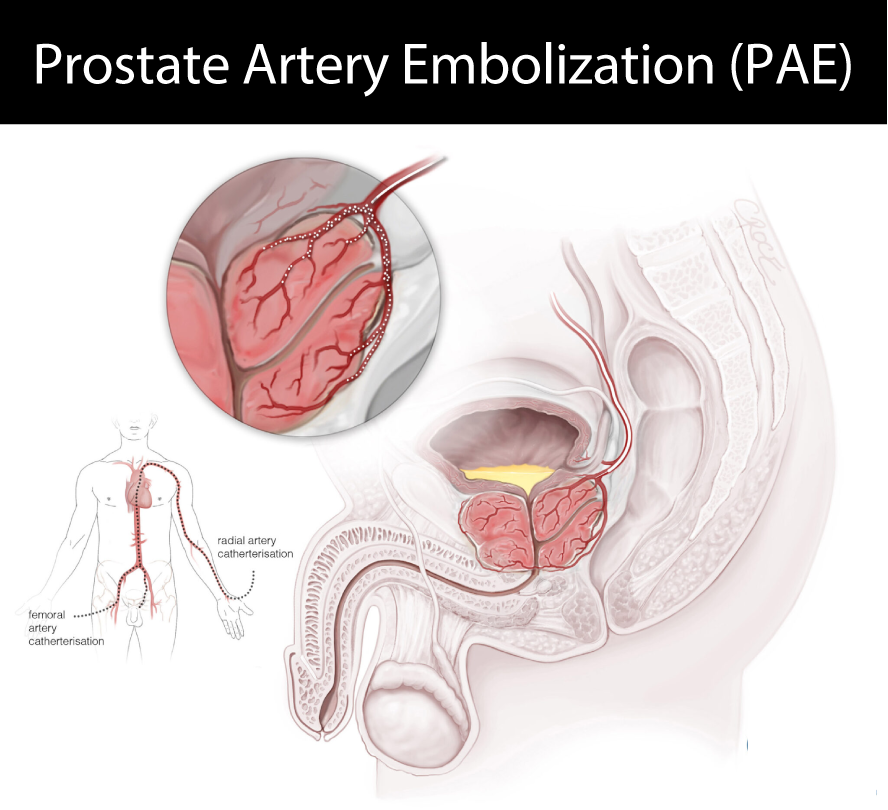
Prostatic artery embolization (PAE) is a safe, non-surgical procedure to reduce the size of the prostate and relieve bothersome lower urinary tract symptoms. PAE is a minimally invasive treatment that has less risk, less pain and less recovery time than traditional surgery. It also doesn't carry the risk of sexual side effects typically associated with invasive surgeries (retrograde ejaculation or erectile dysfunction), when compared with more invasive surgical procedures such as a transurethral resection of the prostate (TURP).
Through image guidance, an interventional radiologist makes a tiny incision in either the groin or the wrist to insert a small, thin tube called a catheter into an artery and directs it to the blood vessels of the prostate. The interventional radiologist then blocks the blood flow to specific areas of the prostate, depriving those prostate cells of oxygen and resulting in the gland's shrinkage.
Benefits of PAE
- No Surgery
- General anesthesia not typically required
- Typically an outpatient treatment
- A lower risk of sexual side effects compared TURP or other surgical options
- Most men do not need Foley catheterization
- No need to hold blood thinners (for men with coronary stents or heart valves)
Who is a candidate for PAE?
You may be a candidate if you:
- Have been diagnosed with BPH
- Experience increased urinary frequency, or urinary incontinence
- Have pain upon urination
- Prefer a non-surgical option


PAE has faster recovery and fewer side effects than TURP or other surgical options

of men report relief from uncomfortable symptoms

PAE is a good option for men who need treatment for symptoms, but want to avoid surgery
Recovery and Results
Men who have undergone PAE have reported high satisfaction, no urinary incontinence or sexual side effects. Minor side effects, most of which resolve on their own, include frequent and/or difficult urination, pelvic pain, blood in the urine, blood in the stool, and diarrhea. Our team provides personalized follow-up care and imaging to monitor your recovery and ensure the best long-term results. Our interventional radiologists work together with your urologist to plan your treatment and aftercare.
Schedule a Tele-Consultation
If urinary symptoms are affecting your quality of life, you don't have to live with the discomfort. Schedule a consultation and find out if Prostatic Artery Embolization (PAE) is right for you.

Call 732.246.0064
Monday–Friday, 8 a.m. to 5 p.m.
Request a Callback from University Radiology's patient service team:
Our Interventional Radiologists
At University Radiology, our board-certified interventional radiologists have extensive experience performing Prostatic Artery Embolization using advanced imaging and catheter technology. We combine expertise with compassionate care, ensuring each patient receives safe, personalized treatment from consultation through recovery.

Sumit Baral, M.D.

Ali A. Saifuddin, M.D.

Shayan Rashid, M.D.
PAE Locations
Our fellowship-trained PAE Interventional Radiologists perform procedures at these leading affiliated hospitals across NJ.


Frequently Asked Questions
What is Prostatic Artery Embolization (PAE)?
Prostatic Artery Embolization (PAE) is a safe, non-surgical treatment that blocks blood flow to the prostate artery causing the prostate gland to shrink.
How long does the PAE procedure take?
The procedure can take anywhere from 1-4 hours, depending on the location and size of the prostatic arteries.
What is the recovery time after PAE?
Most patients are discharged the same day as the procedure. Recovery is typically 5-7 days, much faster than the surgical alternative TURP.
Does insurance cover PAE?
Yes, PAE is covered by most health insurance plans, including Medicare, as it is considered a standard treatment for Benign Prostatic Hyperplasia (BPH). Check with your insurance provider or our staff for confirmation.
Who performs PAE?
PAE is performed by board-certified interventional radiologists at University Radiology who specialize in image-guided, minimally invasive procedures.
What Patients Are Saying About PAE
"Two weeks after the PAE procedure I'm waking less frequently and no longer experience strong symptoms." — Bill
"My experience with PAE was very positive, I am happy I made the decision to have the procedure and am pleased with the results." — Steven
"PAE is minimally invasive with fast recovery time. Above all, and it gave me back my life." — James