


Ultrasound
- Overview
- Abdominal Sonogram
- Aorta Sonogram
- Bladder Sonogram
- Breast Sonogram
- Breast Aspiration
- Carotid Doppler Sonogram
- Elastography
- Hip Sonogram
- Neurosonogram
- Pelvic Sonogram
- Pregnancy Sonogram
- Renal Sonogram
- Sonohysterogram
- Scrotal Sonogram
- Thyroid Sonogram
- Transvaginal Sonogram (TV)
Ultrasound Overview
Overview
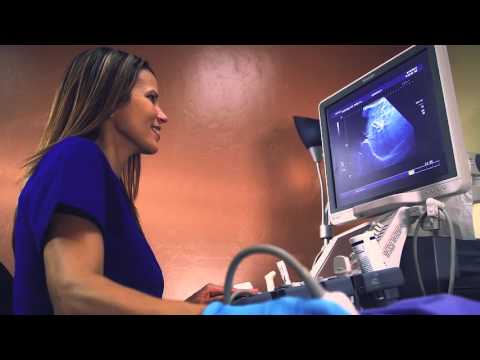
Ultrasonography is a method of examining parts of the body without the use of x-rays. During an ultrasound examination, a water-soluble "gel" is put on the skin and a transducer or probe is moved over the area to be scanned. Harmless sound waves pass through the area of interest and record a picture on film. The results of the ultrasonography are sent to the referring physician. The types of ultrasound exams and the patient preparation required are described briefly below.
All Ultrasound exams require a written prescription or referral stating the exam being ordered and the patient’s signs and symptoms indicating medical necessity of the procedure.
Patients should bring previous films or related exams to their appointment. This information is very important and will expedite the report of the diagnosis back to the referring physician.
Common Ultrasound Studies
Abdominal Sonogram
For evaluation of the upper abdomen, including the gallbladder, liver, bile ducts, pancreas and spleen. Nothing taken by mouth after midnight the night before the exam. Any special medication that is currently being taken by the patient can be taken with a small amount of water.
Aorta Sonogram
For evaluation of aneurysm. Nothing taken by mouth after midnight the night before the exam.
Bladder Sonogram
For evaluation of the bladder. Adults drink three 8-ounce glasses of water 1.5 hours before exam time. The patient should not void. Children require an individualized preparation. Please check with our office.
Breast Sonogram
For evaluation of women with a palpable lump or to clarify the nature of a mass seen on mammography. No prep required.
Note: This exam should not be performed for patients with breast pain only.
Breast Aspiration
Procedure using ultrasound guidance for removal of fluid from a breast cyst. No preparation is required.
Carotid Doppler Sonogram
For evaluation of carotid arteries. No preparation required.
Elastography
A noninvasive procedure that enables assessment of liver stiffness under ultrasound guidance.
Hip Sonogram
For evaluation of congenital hip dysplasia or joint effusion. No prep required.
Neurosonogram
To evaluate infants for possible hydrocephalus. No prep required.
Pelvic Sonogram
For evaluation of pregnancy, gynecological problems, abscesses (e.g. appendiceal, diverticular, etc.) and pelvic or lower abdominal masses. This examination does not use radiation in any form and is not harmful to the reproductive organs or unborn babies.
The patient must eat breakfast the morning of the exam to help the body absorb the water and fill the bladder. The patient should drink three 8-ounce glasses of water as quickly as possible 1.5 hours before the sonogram. The patient should not void until after the scan.
While having the bladder full for the examination may be uncomfortable, the examination cannot be done otherwise. The bladder must be distended to push the bowel away from the uterus and to act as a “window” for the sound waves to pass through the fluid collected in the bladder. Please note that if the bladder is not full, we may have to reschedule the appointment.
Pregnancy Sonogram
For evaluation of the pregnancy and surrounding structures. Up to 12 weeks of pregnancy the preparation is the same as the pelvic preparation described above. After 14 weeks of pregnancy, the patient should drink two 8 ounce glasses of water as quickly as possible 1.5 hours before the sonogram. The patient should not void until after the scan.
Renal Sonogram
For evaluation of masses, obstruction or calcifications. No preparation is required.
Sonohysterogram
For evaluation of the endometrium. A transvaginal exam will be performed immediately before the sonohysterogram.
The sonohysterogram is performed by a radiologist. The radiologist will cleanse the cervix and insert a speculum into the vagina. A thin catheter will be inserted into the vagina through the cervix to the endometrium and the speculum is removed. The transvaginal probe will then be inserted and under ultrasound surveillance, sterile water will be injected into the endometrial cavity. Some pelvic cramping can be associated with this procedure; therefore the patient should take two ibuprofen tablets prior to the exam. Some spotting may occur after the procedure.
Scrotal Sonogram
For evaluation of scrotal mass or inflammation. No preparation is required.
Thyroid Sonogram
For evaluation of mass or enlargement of the thyroid gland. No preparation is required. If the patient has had any nuclear medicine scans done in this area, it is important to have those studies for this exam.
Transvaginal Sonogram (TV)
For evaluation of the endometrium, early pregnancies, and gynecological problems. Any patient currently using tomaxafin or those on hormone replacement therapy should have a transvaginal ultrasound.
The TV exam is performed on a patient who has an empty bladder. If a TV exam is ordered or indicated the patient will be asked to void after the pelvic sonogram.
The sonographer will ask the patient to insert a slender probe into her vagina. The probe is covered with a sterile condom for the patient's protection. The sonographer will then take the end of the probe from the patient and gently move it from side to side. This exam should be painless although sometimes the patient may experience a slight tugging sensation.

- Overview
- Abdominal Sonogram
- Aorta Sonogram
- Bladder Sonogram
- Breast Sonogram
- Breast Aspiration
- Carotid Doppler Sonogram
- Elastography
- Hip Sonogram
- Neurosonogram
- Pelvic Sonogram
- Pregnancy Sonogram
- Renal Sonogram
- Sonohysterogram
- Scrotal Sonogram
- Thyroid Sonogram
- Transvaginal Sonogram (TV)